
Westford City Directory Year Runs
The State Library directory inventory identifies a real but uneven sequence of Westford directory and street-listing volumes. It is the best starting point for an exact edition search because it names the town and the years, while local repositories add street listings and local compilations. The inventory does not state the publisher for each Westford issue. Inspect the title page before recording a publisher, place, edition, or any abbreviation key. A historical listing is evidence tied to its printed year, not a statement about where anyone lives now.
| Collection or record group | Verified years | Where held | Access route |
|---|---|---|---|
| Westford directories and street listings | 1896-1901; 1911-1916; 1919; 1927; 1930-1933; 1937-1941; 1953; 1955; 1961; 1967 | Massachusetts State Library collection | Verify shelf or scan availability before a visit |
| Local street listings and directories | Street listings back to the 1980s; earlier directories described locally | J.V. Fletcher Library and Westford Historical Society | Ask about current availability or an appointment |
| Reverse or criss-cross material | Exact Westford edition years not located | Fletcher reference desk or Historical Society | Ask whether a specific edition is held |
| Newspapers used to corroborate a listing | Rustic 1885; Eagle and Westford Eagle 1970-1976 | Advantage Preservation | Searchable online scans with page images |
There are gaps between those directory years. The sources do not establish a first publisher, a last printed edition, or a complete local reverse-directory run. Treat each gap as a question for the holding institution, rather than filling it with a guessed publication history.
Westford City Directory Boundaries
Directories, voting lists, street listings, and newspapers are related collections, but they are not interchangeable. The State Library separately identifies Westford voting lists for 1924 and 1978 through 1980. The Historical Society describes local directories and street listings, while its wording may include local compilations. The safest catalog note preserves the collection title exactly as found and records its repository.
Directory history also has a clear caution. The State Library runs begin in 1896 and continue with gaps through 1967, while the Historical Society reports street listings into the 1980s. That shows a longer local trail, not an unbroken set of the same publication. Westford records before modern street addressing can instead use an owner name, village, road label, or legal description.
Note: A catalog listing establishes that an issue exists, but the title page and page image establish the edition details needed for a citation.
Westford Directory Shelf Access
J.V. Fletcher Library Local History links researchers to town annual reports from 1840, newspapers, church material, vertical files, oral histories, maps, and other local sources that can support a directory find. Its vertical-file subjects include citizens, churches, schools, town departments, military, monuments, recreation, geology, and industry. Those files can supply context for a name, yet they are not an indexed resident database.
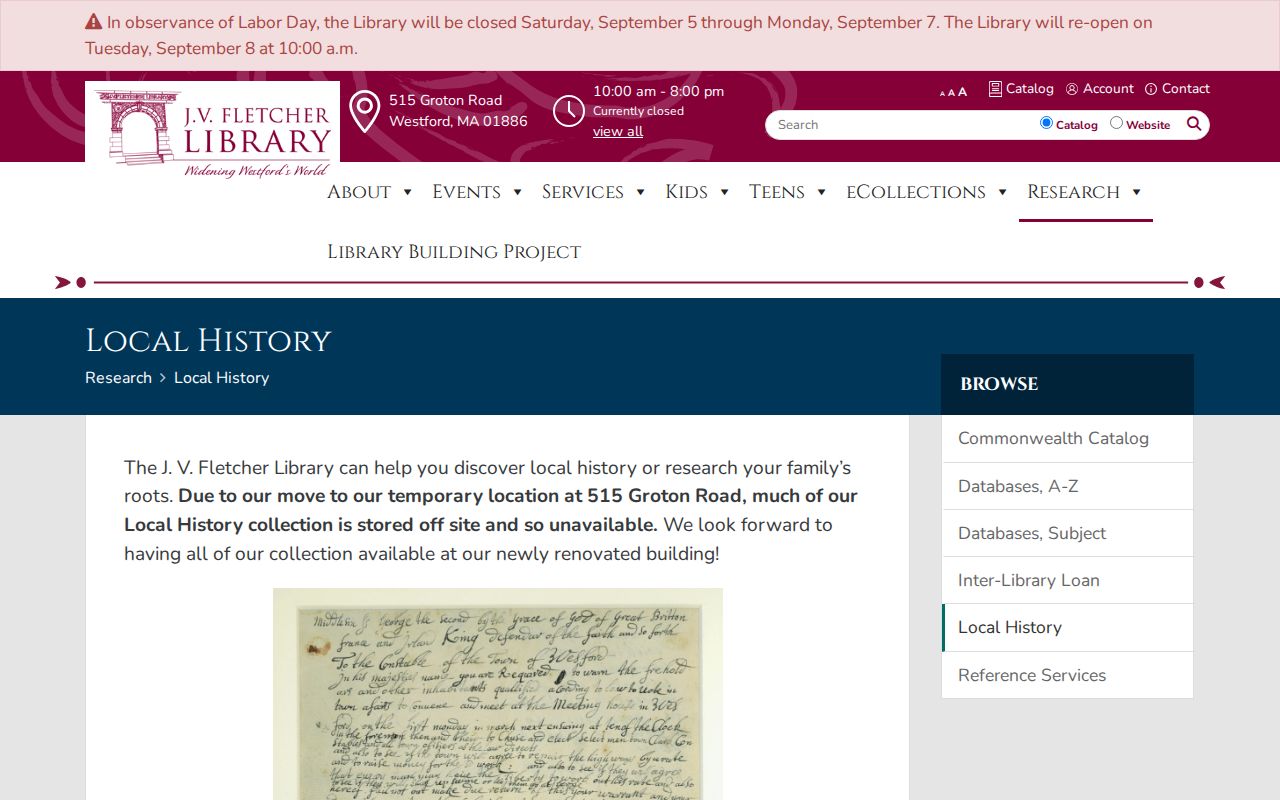
The library is temporarily at 515 Groton Road during its building move. The current access notice says Eagle microfilm, microfilm town reports, school, tax and vital records, yearbooks, maps, and Lowell Sun scrapbooks are temporarily unavailable. Ask the reference desk for the current availability of a particular directory or for an appointment with Local History Librarian Charles Rose-Schweppe.
That limitation changes the order of research. Check online material first, then confirm whether the desired physical volume is on site before relying on an older finding aid. A collection location can change even though the catalog description remains useful.
Read a Westford City Directory Entry
Westford’s verified collection information establishes where to look, but no machine-readable scan of a Westford entry was available to confirm local symbols or shorthand. Read a volume as a printed record. Capture the page or image number, directory year, title page, and abbreviation key before interpreting the person line. The fields below are an inspection checklist, not a claim that every Westford edition prints each field.
| Printed name | Record the name as printed, including initials and spelling variants. |
|---|---|
| Household notation | Check for a spouse or other household notation in parentheses. |
| Occupation or business | Capture an occupation or business only if the entry prints it. |
| Street and number | Copy the address exactly, then compare it with the year and nearby entries. |
| Other marks | Check for owner, renter, boarding, or widow notation only where the volume’s own key defines it. |
Exact local abbreviations have not been verified. Do not expand a letter from memory or borrow a key from another town. A title page and the front matter can settle what an individual publication meant by its own marks.
Westford Directory Terms
Directory vocabulary matters because it describes the arrangement of a book, not the strength of a claim about a person. These terms help frame a question for the library or Historical Society. They also make it easier to distinguish a name-order entry from an address-order tool.
- Criss-cross directory
- An address-order directory that can place printed names under a street and number. Exact Westford edition years have not been confirmed.
- Householder index
- A list arranged around household or address access, depending on the publication’s own design.
- Abbreviation key
- The publication’s explanation of its symbols and shortened terms, usually found in the volume’s introductory pages.
- Directory citation
- A note that keeps the title, year, page or image, repository, and the text actually printed together.
Westford City Directories Across Census Years
A household trail is stronger when the steps keep the source dates separate. Federal population census records are publicly available through 1950 under the 72-year rule, and the Historical Society identifies Westford 1855 and 1865 state census data. The 1890 federal census is mostly unavailable because of the 1921 Commerce Department fire. A missing 1890 result is therefore a known records gap, not proof that a household left town.
- Locate the surname in one verified directory year and copy its printed spelling, street, page, and title information.
- Check the next available Westford edition, not an assumed annual sequence, and note every change in name form or address.
- Pair the directory date with the nearest available federal or Westford state census, keeping the household order and census page with the comparison.
- Use historic maps, town reports, cemetery records, or a Registry record to test whether the place and time fit the same household.
- When a directory find needs a later official check, use the Westford resident lookup route without treating the historic listing as current proof.
A name that disappears may reflect a move, death, a different listing style, or a missing run. The right response is to check the next source in time. Preserve uncertainty instead of assigning a reason from one absence.
Westford Newspaper Directory Checks
Scanned newspapers are useful companions to a historical listing. Advantage Preservation provides the 1885 Rustic, Eagle issues from 1971 through 1976, Westford Eagle issues from 1970 through 1971, and Liberty Bell from 1975. Search a surname alone, then try a surname with a village, street, church, school, or event. Save the issue date, publication title, page, and item URL with any result.
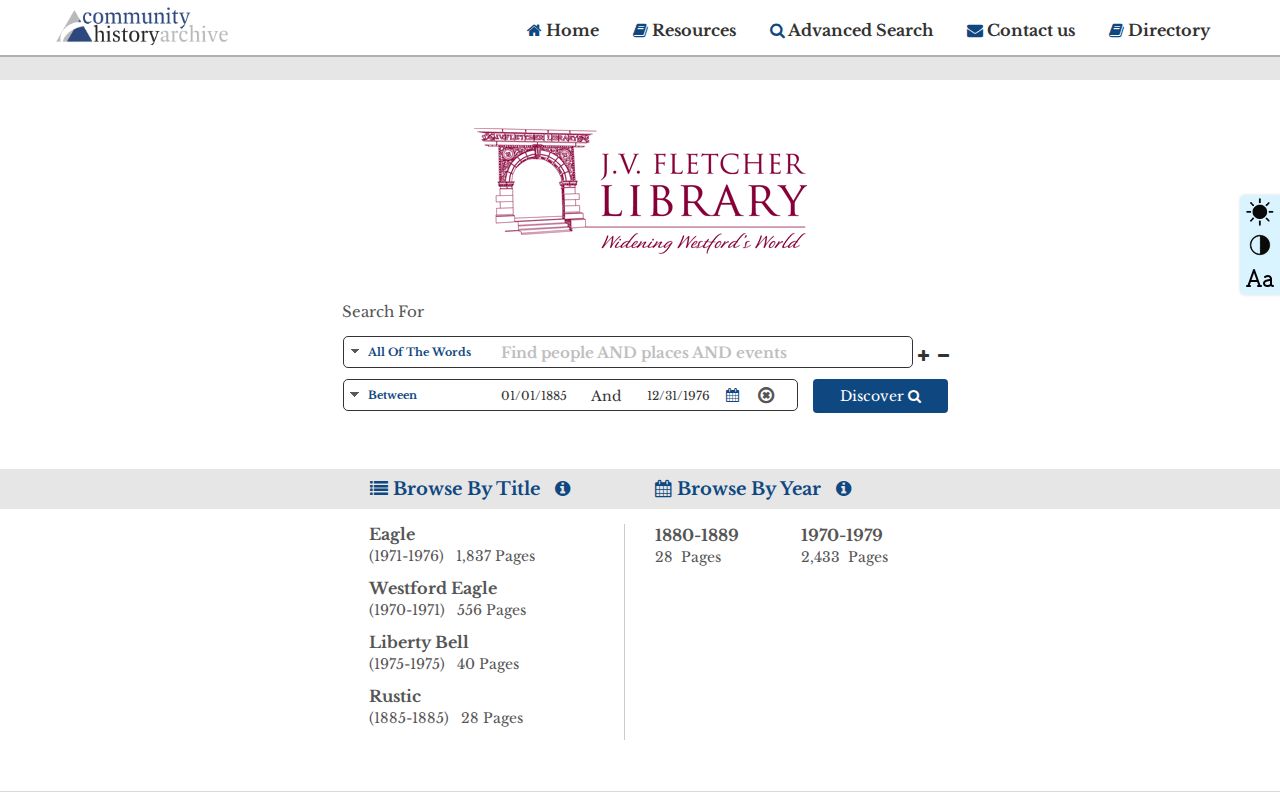
The newspaper collection gives a dated image to compare with a directory entry. It does not replace the directory, vital record, cemetery record, deed, or census that answers a different question.
OCR can misread surnames and street numbers. Inspect the scan itself, especially when a hit appears to settle an identity question. A surname match becomes more useful when its date, place, and household details agree with another record.
Westford Historical Society Paths
Westford Historical Society research offers a genealogy database lookup at its office, Middlesex North deed indexes for 1629-1855 with digital copying to a thumb drive, annual reports from 1840, historic-house summaries, maps, school and yearbook material, military and burial indexes, and the Atwood Collection. It also reports street listings back to the 1980s and local directories. These are useful next steps when a directory volume gives only a short name or a place.
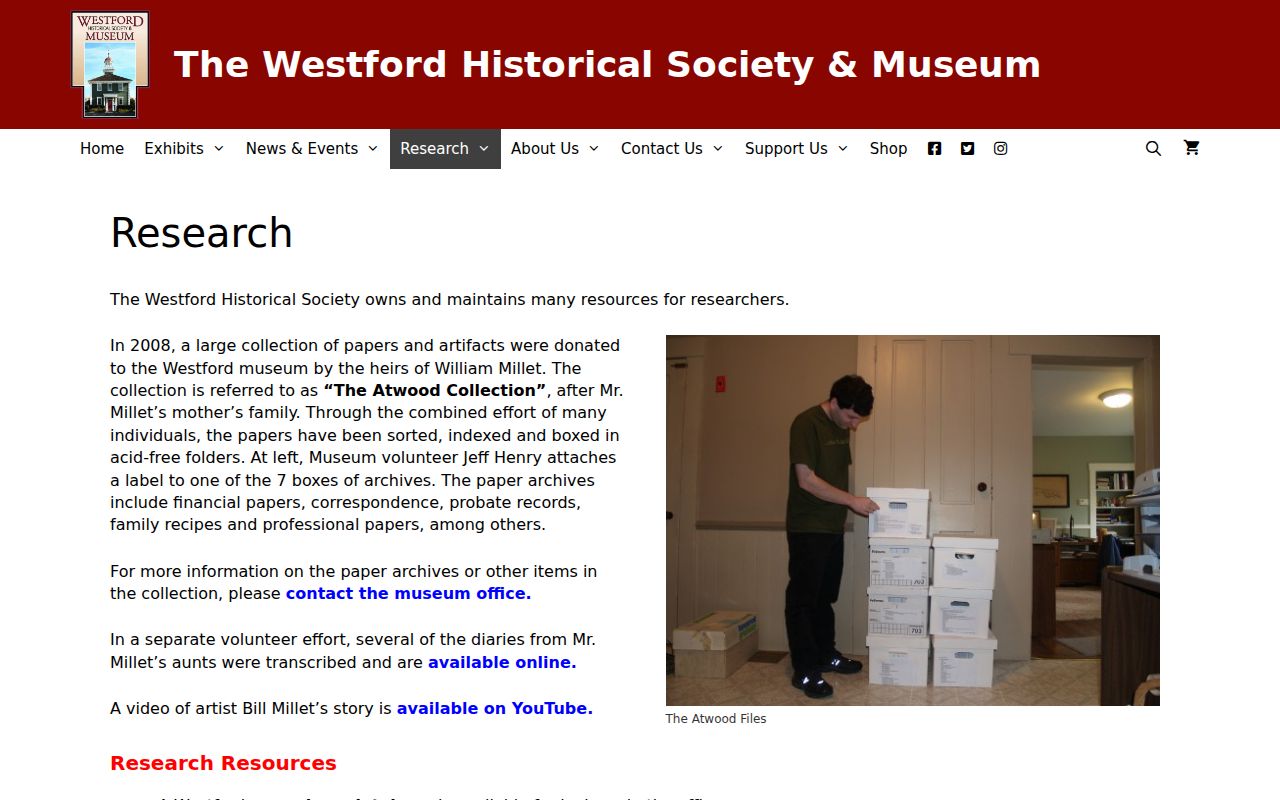
The Society’s research library is at Museum Cottage, 4 Boston Road, open Monday, Wednesday, and Friday from 9:00 to 1:00. Its phone number is 978-692-5550. The museum is generally open Sundays from 1:00 to 3:00. Ask about an office lookup before expecting a particular collection to be available.
For an older Westford household, the Society’s 1855 and 1865 state census data, historic maps, and house summaries can help test a location named in a directory. Official copies of vital records remain with the Town Clerk.
Westford City Directory Context
Westford Directory is a voluntary community directory with a searchable listing form and add or edit fields. It is a current community layer, not a government record and not a replacement for the historical collections. A missing voluntary listing does not establish that a person was absent from Westford, and a listing should be read under the directory’s own terms.
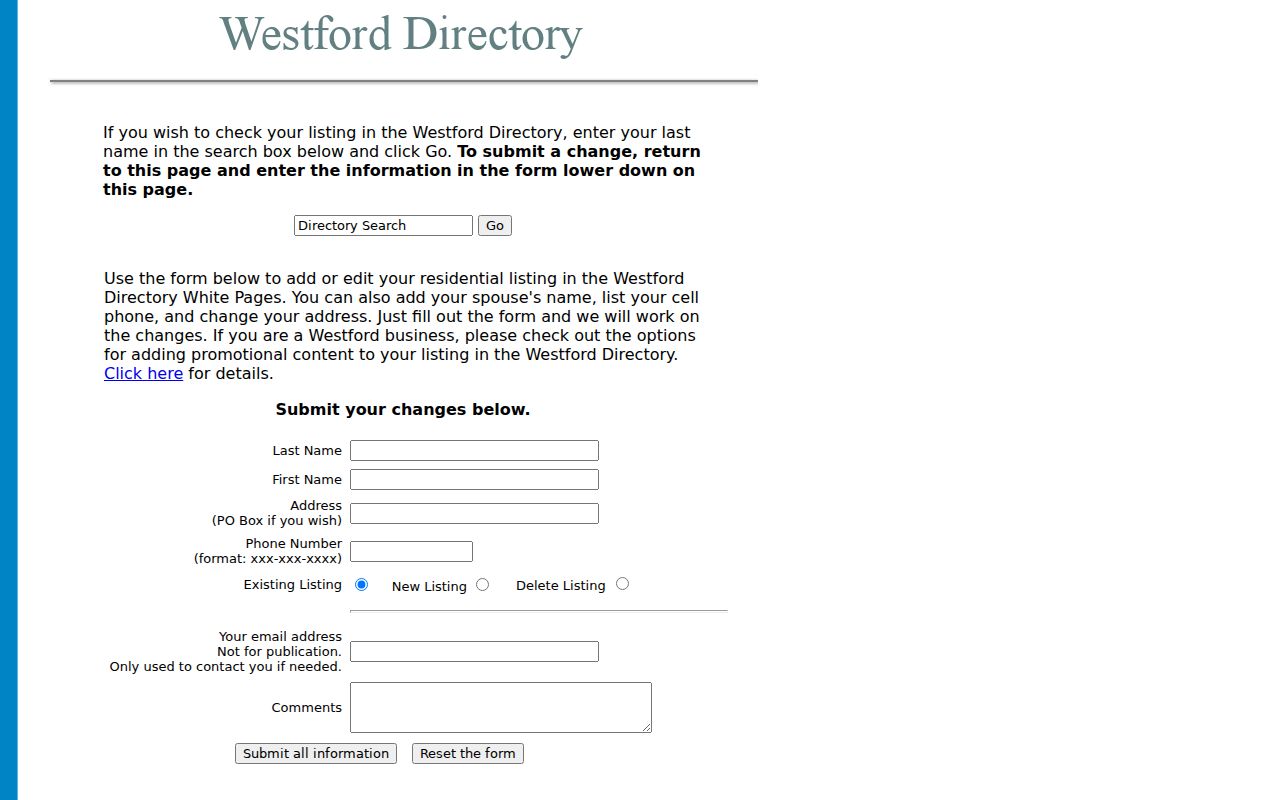
The voluntary directory illustrates the difference between opt-in community information and a printed historical book. Keep its status separate from a town record, a deed index, a census schedule, or a newspaper item.
Westford’s six historic village identities, including Center, Forge Village, Graniteville, Brookside, Nabnasset, and Parker Village, can be valuable search terms when a directory uses a local place reference instead of a modern address. They are context clues, not proof of a household.
Westford Directory Limits
A directory entry is historical evidence of what appeared in that publication. It may omit people, use a name variant, or reflect a street system that changed later. Westford’s historical records can predate standardized street addressing, and local sources document duplicate street names plus missing or inconsistent numbers. Retain the original wording before trying to match it to a modern parcel.
For a modern address-keyed record trail, use the Westford street directory approach. For historical work, confirm each finding with the custodian or repository that holds the underlying record. Do not use historical listings to harass, monitor, or harm another person.